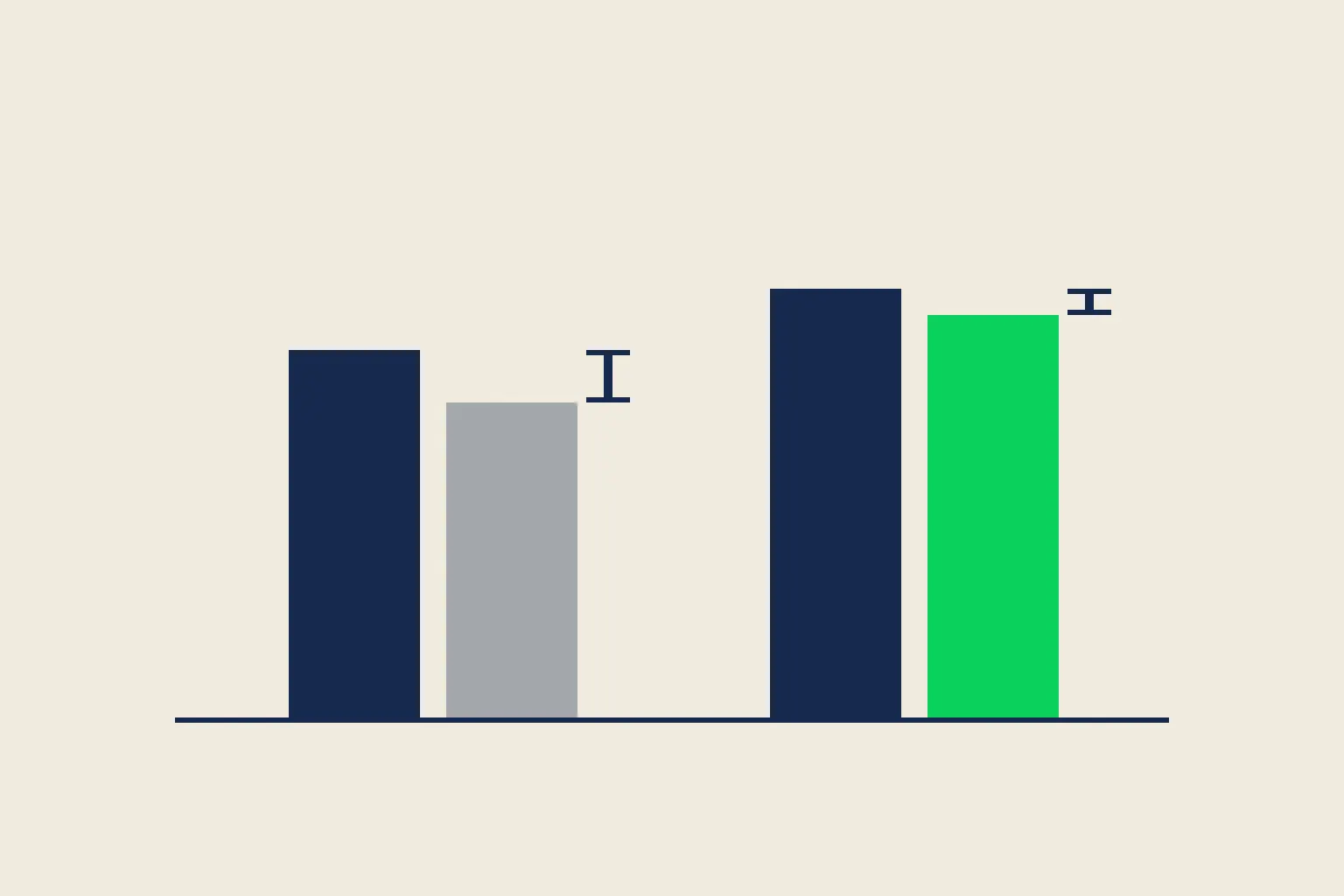
What happened. Meta’s advertising revenue for the second quarter of 2026 rose 27 per cent to $59.4 billion. Ad impressions grew 14 per cent and the average price per ad 12 per cent. Google’s “Search & other” revenue grew 17 per cent in the same quarter to $63.3 billion. A year ago the gap between the two lines was $7.6 billion; this quarter it was $3.9 billion. On 31 August Bernstein analysts wrote that Meta could overtake Google Search in ad revenue before the year is out, and that Meta took nearly half of every new digital ad dollar in the second quarter. Both are playing the race in concrete: Meta expects $130-145 billion of capital spending in 2026, and Alphabet spent $44.9 billion in the second quarter alone.
The bigger picture. The two giants have put AI in two different places. Google’s AI sits in its own shop window: the more it answers in the search result itself, the smaller the clickable space where ads live. Meta’s AI works inside the feed: it picks which video you watch and which ad you see, and it has no link to lose. Meta sells attention it produces itself. Google is trying to sell intent it now answers on its own. A 12 per cent rise in price per ad also shows advertisers are willing to pay more for that machine.
For executives: Splitting Meta into a “social” line and Google into a “search” line in the media plan is out of date. They are two AI sales machines competing for the same budget. Build the comparison that way.